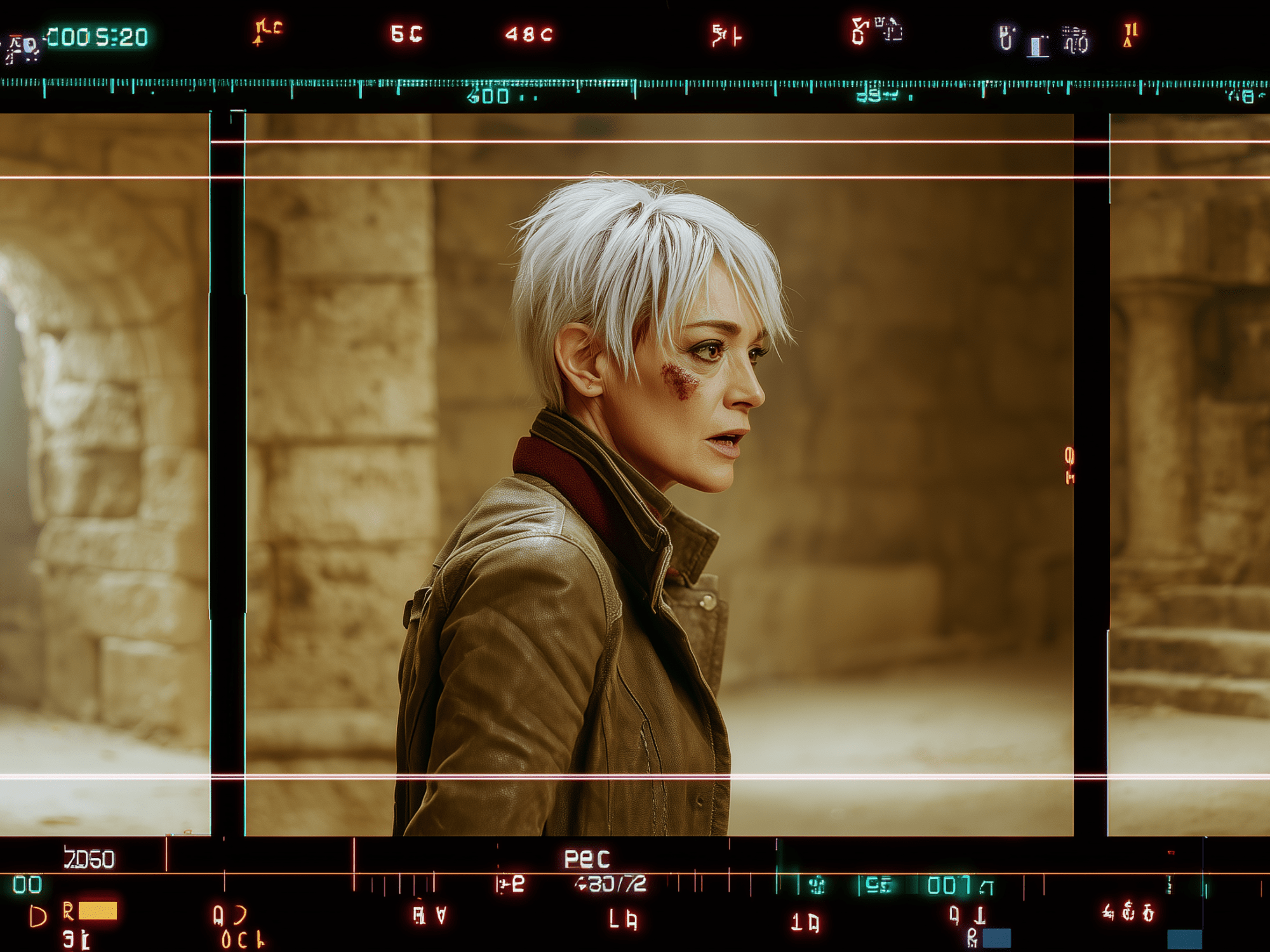

Marcus Chen thought he had cracked the code. His first AI-generated short film looked incredible—each individual scene was a masterpiece of composition and lighting. The opening shot of Detective Riley emerging from the rain-soaked alley was film noir perfection. The interrogation room scene crackled with tension. The final confrontation in the warehouse was visually stunning.
Then he tried to edit them together.
Detective Riley had brown eyes in scene one, blue eyes in scene three, and green eyes in the finale. Her leather jacket was black, then brown, then inexplicably became a trench coat. The interrogation room’s stark fluorescent lighting somehow transformed into warm, wood-paneled ambiance. The warehouse that was supposed to be the same location looked like three different buildings.
Marcus’s film had become an unintentional surrealist nightmare. Every cut revealed glaring inconsistencies that shattered the illusion of reality. Three months of work seemed destined for the digital trash bin.
That’s when Marcus discovered the hidden art of AI continuity—and transformed his chaotic footage into an award-winning short that would revolutionize his understanding of generative filmmaking.
The Anatomy of AI Continuity
The problem Marcus faced is endemic to AI filmmaking. Traditional cinematography maintains consistency through physical reality—the same actor, the same location, the same props. But AI generation creates each frame independently, with no memory of what came before. Every prompt is a fresh start, leading to what Marcus came to call “the continuity cascade”—where small inconsistencies compound into narrative disasters.
His breakthrough came when he realized that consistency isn’t just about maintaining visual elements—it’s about building a persistent world that exists beyond individual prompts.
The Character Bible Revolution
Marcus’s first innovation was creating what he called “character DNA”—detailed descriptions that would remain consistent across every scene. Traditional character sheets weren’t enough; he needed to think like a forensic scientist, cataloging every visual detail that could potentially vary.
Standard approach: “Detective Riley, 35-year-old woman, tough cop”
Marcus’s character DNA: “Detective Riley: 35-year-old Hispanic woman, 5’6″, athletic build, dark brown eyes (specific Pantone 476C reference), straight black hair in a practical shoulder-length bob, small scar through left eyebrow, wears silver stud earrings, signature black leather jacket (worn, not pristine, with scuffed elbows), dark blue jeans, black combat boots, carries a silver Zippo lighter (never smokes, just fidgets), wedding ring on right hand (family tradition)”
The key was specificity. “Dark brown eyes” could vary across AI interpretations, but “Pantone 476C” provided a consistent reference point. The scar and Zippo lighter became unique identifiers that helped the AI maintain character recognition across scenes.
Marcus discovered that including these detailed descriptions in every single prompt—even for scenes where certain details weren’t visible—helped the AI maintain internal consistency. The character became a complete person rather than a collection of individual interpretations.
Location Continuity Architecture
The next challenge was environmental consistency. Marcus learned to treat locations like architectural blueprints rather than simple descriptions.
Basic location prompt: “Police station interrogation room”
Marcus’s location architecture: “Police station interrogation room B-4: 12×10 foot concrete block room, painted institutional green (Sherwin Williams 6431), single metal table centered 3 feet from north wall, two metal chairs (one facing door, one with back to door), overhead fluorescent fixtures casting harsh downward shadows, one-way mirror on east wall (4×3 feet), analog clock on west wall showing 2:47 AM, thermostat set to 68°F visible next to light switch, small water stain on ceiling northwest corner, linoleum floor with slight scuffing near door”
This level of detail served multiple purposes. The specific measurements and color references ensured visual consistency. The clock time became a continuity anchor—Marcus could reference it in subsequent scenes to maintain temporal logic. Even the water stain became a visual landmark that helped the AI recognize the location.
Marcus created detailed maps of every location, complete with lighting diagrams and prop inventories. He treated each space like a film set that needed to be perfectly recreated for every scene.
The Costume Continuity System
Wardrobe inconsistencies nearly destroyed Marcus’s film, so he developed what he called “the costume genome”—tracking not just what characters wore, but how those clothes evolved throughout the story.
For Detective Riley’s leather jacket, he created a wear progression chart:
Scene 1 (Day 1): “Black leather jacket, recently conditioned, minor scuffing on elbows, all zippers functional”
Scene 4 (Day 3): “Same black leather jacket, now with coffee stain on left cuff, slight tear in right shoulder seam from chase scene”
Scene 8 (Day 5): “Black leather jacket showing accumulated wear, coffee stain now set, tear in shoulder expanded to 2-inch L-shape, left elbow scuffing more pronounced”
This approach maintained realism while ensuring continuity. The jacket didn’t magically reset between scenes—it accumulated the story’s physical toll, making the character’s journey more believable.
The Lighting Continuity Challenge
Lighting consistency proved to be Marcus’s most complex challenge. Each scene needed to maintain not only its own internal lighting logic but also connect visually to surrounding scenes.
Time-of-Day Anchoring
Marcus developed a “temporal lighting map” that tracked sun position, weather conditions, and artificial lighting throughout his story’s timeline:
6:47 AM Scene: “Golden hour lighting, sun 23 degrees above eastern horizon, long shadows pointing northwest, warm color temperature 3200K, slight morning haze diffusing harsh edges”
6:52 AM Scene (5 minutes later): “Sun now 25 degrees above eastern horizon, shadows shortened by approximately 8%, color temperature shifted to 3400K, morning haze beginning to lift”
This scientific approach to lighting continuity helped maintain temporal believability. Marcus realized that viewers subconsciously notice when lighting doesn’t match story logic, even if they can’t articulate why a scene feels wrong.
Artificial Lighting Consistency
Interior scenes required their own lighting architecture. Marcus cataloged every light source:
Detective Riley’s Apartment – Living Room: “Primary illumination: single table lamp with warm LED bulb (2700K), 40-watt equivalent, white fabric shade casting soft diffused light in 6-foot radius. Secondary: blue glow from muted television (screen showing static news broadcast), flickering slightly. Ambient: street light through north-facing window filtered by sheer curtains, creating parallel shadow lines across hardwood floor”
By treating lighting as a character itself, Marcus ensured that the emotional tone remained consistent even as AI generation varied other elements.
Color Palette Governance
Color inconsistency had been one of Marcus’s biggest problems. His warehouse scene shifted from cool blues to warm oranges between shots, destroying the carefully crafted mood. His solution was “palette governance”—establishing strict color rules for his entire film.
The Three-Color Rule
Marcus limited each scene to three primary colors, with specific hex codes:
Interrogation Scene Palette:
- Primary: Institutional Green (#4A5D23) – walls, authority
- Secondary: Harsh White (#F8F8FF) – fluorescent lighting, sterility
- Accent: Blood Red (#8B0000) – tension, danger
Every prompt included these color specifications, ensuring visual cohesion even when other elements varied.
Emotional Color Mapping
Marcus mapped colors to emotional beats throughout his story:
Act I (Setup): Cool blues and grays suggesting isolation and mystery Act II (Confrontation): Warm ambers and harsh whites creating tension Act III (Resolution): Deep purples and golds implying transformation
This color journey helped maintain narrative consistency even when individual scenes were generated separately.
The Prop Continuity Database
Small details nearly derailed Marcus’s film. Detective Riley’s coffee cup changed size, color, and contents between shots within the same scene. Her case files multiplied and disappeared randomly. Her car transformed from a sedan to an SUV to a pickup truck.
Marcus solved this with obsessive prop documentation:
Riley’s Coffee Cup: “White ceramic mug, 12 oz capacity, ‘World’s Okayest Detective’ text in black Comic Sans font (ironic gift from partner), small chip on handle from being dropped last month, contains black coffee (no cream, no sugar), liquid level at 60% capacity when first seen”
Riley’s Case Files: “Manila folder containing 23 pages, slight coffee ring stain on cover upper right corner, contains: 8 crime scene photos (4×6 glossy), 12 witness statements (typed on police letterhead), 2 evidence bags visible in folder lip, 1 coroner’s preliminary report (2 pages, stapled)”
The key was treating props like inventory items in a video game—each with specific attributes that couldn’t change unless the story explicitly modified them.
The Continuity Anchor System
Marcus’s most powerful technique was developing “continuity anchors”—visual elements that appeared in multiple scenes and served as consistency checkpoints.
Recurring Visual Motifs
The silver Zippo lighter became Marcus’s primary anchor. It appeared in seven scenes, always with the same scratched surface, the same way it caught light, the same practiced flip Riley used when thinking. By maintaining this one prop’s absolute consistency, Marcus created a visual thread that tied scenes together even when other elements varied slightly.
Background Continuity Characters
Marcus populated his world with consistent background characters who served as living continuity anchors:
Joe the Bartender: “62-year-old man, salt-and-pepper beard always trimmed to exactly 3/4 inch length, blue flannel shirt (same shirt, washed but not replaced), wiping glasses with white bar towel, slight limp from old injury, always positioned behind bar’s left section”
Joe appeared in three scenes, always exactly the same. His consistency helped establish the bar as a real place with persistent inhabitants rather than a series of individually generated rooms.
The Technical Workflow Revolution
Marcus developed a systematic workflow that prevented consistency errors before they occurred:
The Master Prompt Architecture
Each scene prompt followed Marcus’s rigid template:
- Character DNA block (consistent across all scenes)
- Location architecture (specific to scene but consistent with established geography)
- Temporal anchors (time, weather, lighting conditions)
- Prop inventory (every visible object with consistent descriptions)
- Color governance (scene-specific palette within overall film scheme)
- Emotional context (character state, story beat, thematic elements)
- Technical specifications (camera, lens, framing)
This template ensured that no prompt was generated without considering all continuity factors.
The Reference Shot System
Marcus created what he called “reference shots”—master images for each character, location, and key prop that served as visual anchors for all subsequent generations. Before generating any new scene, he’d review these reference shots and incorporate their specific details into his prompts.
These weren’t just inspiration images—they were forensic references. He’d analyze lighting angles, color temperatures, fabric textures, and architectural details, then encode that information into prompts that would recreate those elements consistently.
The Iteration Methodology
Marcus discovered that consistency required systematic iteration. His process involved:
The Three-Pass System
Pass 1 – Structure: Generate scenes focusing purely on composition, blocking, and basic consistency elements Pass 2 – Refinement: Add detailed continuity specifications and regenerate any inconsistent elements
Pass 3 – Polish: Fine-tune lighting, color grading, and small detail consistency
This approach prevented the overwhelming complexity of trying to achieve perfect consistency in a single generation while ensuring that each pass built upon the previous one’s achievements.
The Continuity Review Protocol
Between each scene generation, Marcus conducted systematic continuity reviews:
- Character appearance verification (comparing against character DNA)
- Location architecture confirmation (checking against established blueprints)
- Prop inventory audit (ensuring all items matched their specifications)
- Lighting logic verification (confirming temporal and spatial accuracy)
- Color palette compliance (checking against established schemes)
Any inconsistencies triggered immediate regeneration with corrected prompts.
The Breakthrough Moment
Three weeks into implementing his new continuity system, Marcus generated a sequence that changed everything. Detective Riley walked from her apartment hallway into her living room, and for the first time, it looked like the same person entering the same space. The lighting matched. Her jacket showed the same wear patterns. The coffee cup maintained its chip and liquid level.
More importantly, the sequence felt real. The AI hadn’t just generated two beautiful images—it had created a continuous moment in a believable world.
That sequence became the foundation for Marcus’s award-winning short film “Persistent Rain,” which premiered at three film festivals and landed him commercial directing work specifically focused on AI-assisted storytelling.
The Business of Believable Worlds
Marcus’s mastery of AI continuity transformed his career prospects. Clients weren’t just buying his creative vision—they were investing in his ability to create believable, consistent worlds rapidly and cost-effectively.
Traditional film productions spend enormous resources on continuity. Script supervisors, costume assistants, and set photographers all work to maintain consistency across shoots that may span months. Marcus could achieve similar results in days, but only because he’d learned to think like an entire continuity department compressed into prompting expertise.
His commercial work now includes brand storytelling projects where consistency across multiple pieces is crucial. Fashion brands hire him to create cohesive campaigns where models, locations, and products remain consistent across dozens of generated images. His systematic approach has become a competitive advantage in an increasingly AI-saturated market.
The Future of Persistent Worlds
As AI generation technology advances, Marcus believes that consistency techniques will separate professional AI filmmakers from hobbyists. The ability to create persistent, believable worlds will become as fundamental as understanding exposure or editing rhythm.
He’s currently developing what he calls “the continuity engine”—a systematic approach to building persistent AI worlds that can support long-form storytelling. His goal is creating AI-generated content that can sustain feature-length narratives without continuity breaks.
The techniques Marcus pioneered are already influencing other AI filmmakers. His “character DNA” approach has been adopted by creators working on everything from advertising campaigns to experimental short films. His location architecture methodology is being used to create consistent virtual sets for remote production workflows.
The Persistent Vision
Marcus’s journey from continuity chaos to systematic consistency illustrates a fundamental truth about AI filmmaking: the technology’s power lies not in replacing traditional filmmaking knowledge, but in requiring new applications of that knowledge.
Understanding continuity has always been crucial to filmmaking. In the AI era, that understanding must be encoded into prompts, systematized into workflows, and executed with forensic precision. The filmmakers who master these techniques will create the content that defines AI cinema’s aesthetic possibilities.
Six months after his initial continuity crisis, Marcus looks back at his early, inconsistent attempts with a mixture of embarrassment and gratitude. Those failures taught him that AI filmmaking isn’t about generating beautiful individual images—it’s about creating persis
 AI Film Studio