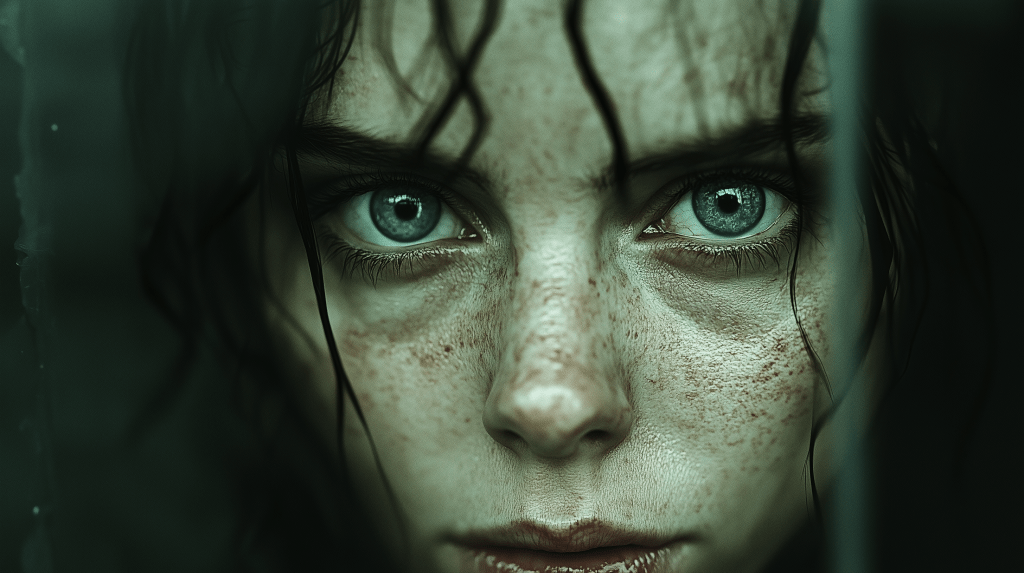
The notification appeared on Elena’s phone at 3:47 AM. As head of post-production at Meridian Studios, she was used to late-night emergencies, but this one was different. Their lead actor, James Morrison, had been hospitalized with a severe case of pneumonia just three days before they were scheduled to shoot the climactic scenes of their $40 million historical drama.
Six months earlier, this would have meant disaster – reshoots, insurance claims, and possibly scrapping the entire project. But as Elena sat in her car outside the hospital, she realized they had options that seemed like science fiction just a few years ago. The future of filmmaking was about to reveal itself in the most unexpected way.
When Reality Meets Technology
Elena’s first call wasn’t to the insurance company or the studio executives. It was to Marcus Chen, the digital effects supervisor who had been quietly experimenting with synthetic likeness technology for the past year. What started as a conversation about visual effects had evolved into something much more profound – the ability to create photorealistic digital humans that could act, emote, and perform with startling authenticity.
“How much footage do we have of James?” Marcus asked when Elena explained the situation. The answer was more than they initially realized. Beyond the scenes they’d already shot, they had hours of screen tests, rehearsal footage, and behind-the-scenes material captured in high resolution. What seemed like a production nightmare was about to become a groundbreaking demonstration of technology’s creative potential.
The process began with Marcus’s team scanning every frame of existing footage, using machine learning algorithms to map James’s facial expressions, gestures, and mannerisms. But this wasn’t just about creating a digital puppet – it was about understanding the subtle nuances that made James’s performance compelling and authentic.
The Art of Digital Performance
Within 48 hours, Marcus had created a preliminary synthetic likeness that captured not just James’s physical appearance, but the essence of his acting choices. The AI had learned to recognize how James raised his eyebrows when delivering skeptical dialogue, the way he tilted his head during emotional moments, and the specific rhythm of his speech patterns.
But the real breakthrough came when they began working with James’s voice. Using just thirty minutes of high-quality audio from their existing footage, the AI voice synthesis system could generate new dialogue that was virtually indistinguishable from James’s natural speech. The technology didn’t just replicate his voice – it understood his emotional range, his accent patterns, and even his habit of emphasizing certain words for dramatic effect.
Elena watched in amazement as the synthetic James delivered lines that the real James had never spoken, with inflections and emotional beats that felt completely natural. The AI had learned not just what James sounded like, but how he approached the craft of acting itself.
Navigating the Ethical Landscape
The technical capabilities were impressive, but Elena knew the real challenge was ethical. Creating synthetic versions of real people raised questions that the film industry was still learning to navigate. Their first step was securing explicit consent from James, who was intrigued by the technology but insisted on maintaining creative control over his digital likeness.
Working with the studio’s legal team, they developed a framework that treated the synthetic James as a collaborative tool rather than a replacement. The real James would review all synthetic performances, providing feedback and approval for each scene. The AI would execute the performance, but the creative decisions remained firmly in human hands.
This collaborative approach yielded unexpected benefits. From his hospital bed, James could direct his own synthetic performance, suggesting adjustments to line delivery and emotional beats that he might not have considered during traditional filming. The technology enabled a new form of creative collaboration that transcended physical limitations.
The Uncanny Valley Breakthrough
The biggest technical challenge wasn’t creating a convincing likeness – it was ensuring that the synthetic James felt genuinely human. Early tests revealed the subtle markers that distinguish authentic performance from artificial recreation. The AI had to learn not just James’s conscious acting choices, but his unconscious behaviors: the micro-expressions that preceded dialogue, the way his breathing affected his voice, the slight asymmetries that made his face uniquely human.
Marcus’s team spent weeks refining what they called “imperfection algorithms” – systems that introduced the subtle flaws and variations that make human performance compelling. The synthetic James needed to blink at irregular intervals, display slight facial asymmetries, and occasionally stumble over words in ways that felt natural rather than programmed.
The breakthrough came when they realized that authenticity wasn’t about perfection – it was about capturing the full spectrum of human behavior, including the small mistakes and inconsistencies that make performances feel lived-in and real.
Beyond Emergency Solutions
What began as a solution to a production crisis evolved into something much more significant. The synthetic James wasn’t just a substitute for the hospitalized actor – it was a new creative tool that opened possibilities that traditional filmmaking couldn’t achieve.
The technology enabled the creation of scenes that would have been impossible or prohibitively expensive to shoot practically. They could place the synthetic James in historically accurate locations that no longer existed, or create performances that combined multiple takes in ways that preserved the emotional continuity of the scene.
More importantly, the synthetic likeness could be directed with unprecedented precision. If a line reading didn’t work, they could adjust the performance incrementally, fine-tuning emotional beats with the same precision that editors use to adjust timing and pacing.
The Performance Revolution
The film’s climactic scenes, featuring the synthetic James, became some of the most emotionally powerful moments in the entire production. Audiences who viewed early test screenings couldn’t identify which scenes featured the real James and which featured his synthetic counterpart. The technology had achieved something remarkable – it had preserved not just the actor’s appearance and voice, but the essence of his performance.
Elena realized they had witnessed the birth of a new art form. Synthetic likenesses weren’t replacing human actors – they were extending the possibilities of human performance. The technology enabled actors to transcend physical limitations, to perform in environments and scenarios that would otherwise be impossible.
The Economics of Digital Humans
From a business perspective, synthetic likenesses represented a fundamental shift in production economics. The ability to create convincing digital humans meant that principal photography could be extended virtually, that reshoots could be conducted without reassembling the entire cast and crew, and that performances could be refined in post-production with unprecedented precision.
But the real economic impact was in the creative possibilities. Films could now feature historical figures with perfect accuracy, deceased actors could be brought back for final performances, and stories could be told across timelines and locations without the traditional constraints of practical production.
The technology also democratized certain aspects of filmmaking. Independent producers could now create films with recognizable faces and voices without the budget constraints of traditional casting. The synthetic likeness of a willing actor could appear in multiple projects simultaneously, expanding creative opportunities across the industry.
The Future of Performance
Six months after James’s hospitalization, Elena’s film premiered to critical acclaim. The synthetic performances were seamless, but more importantly, they served the story in ways that traditional filming couldn’t have achieved. The technology had become invisible – a tool that enhanced rather than replaced human creativity.
James, fully recovered, attended the premiere and was amazed by his own synthetic performance. “It’s me, but it’s also not me,” he remarked. “It’s what I might have been if I could have been perfect in that moment.”
The success of the synthetic performances led to new projects that were conceived specifically to take advantage of the technology. Elena’s studio began developing films that featured synthetic versions of actors performing alongside their real counterparts, creating narrative possibilities that had never existed before.
Mastering the Technology
For filmmakers interested in exploring synthetic likenesses and voices, Elena learned that success depends on three key factors: quality of source material, ethical frameworks, and artistic vision. The technology works best when it has extensive, high-quality reference material to learn from. But more importantly, it requires clear ethical guidelines and a creative vision that uses the technology to enhance rather than replace human performance.
The future of synthetic likenesses lies not in creating perfect artificial humans, but in expanding the possibilities of human expression. As Elena discovered, the most powerful applications of this technology are those that preserve and extend human creativity rather than attempting to replace it.
The New Creative Paradigm
Today, Elena’s studio is pioneering new applications of synthetic likeness technology. They’re working on projects that feature historical figures rendered with perfect accuracy, exploring narratives that span centuries, and creating performances that push the boundaries of what’s possible in traditional filmmaking.
The technology that began as an emergency solution has become a fundamental tool in the creative process. Synthetic likenesses and voices represent more than just a technical achievement – they’re a new medium for storytelling that expands the possibilities of human expression.
As Elena reflects on that late-night phone call that changed everything, she realizes that the future of filmmaking lies not in choosing between human and artificial performance, but in discovering how these technologies can work together to tell stories that neither could create alone. The digital resurrection of James Morrison became the birth of a new art form – one that preserves and extends the magic of human performance into realms that were previously impossible to explore.
The technology that once seemed like science fiction has become an essential tool for filmmakers who want to push the boundaries of what’s possible in cinema. For Elena and her team, synthetic likenesses and voices aren’t just technical capabilities – they’re new instruments for the orchestra of filmmaking, adding voices and faces to the symphony of human creativity.
 AI Film Studio