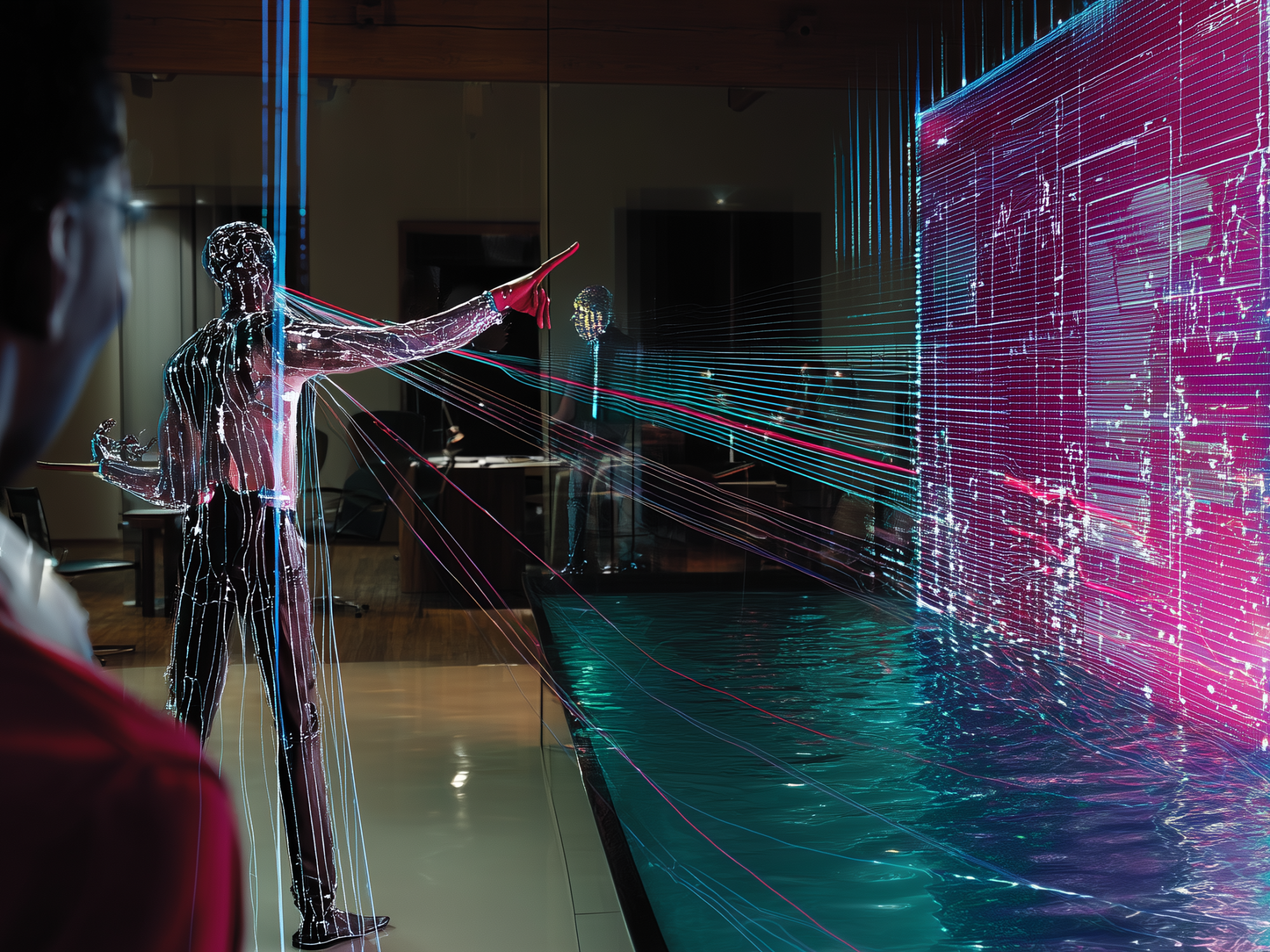
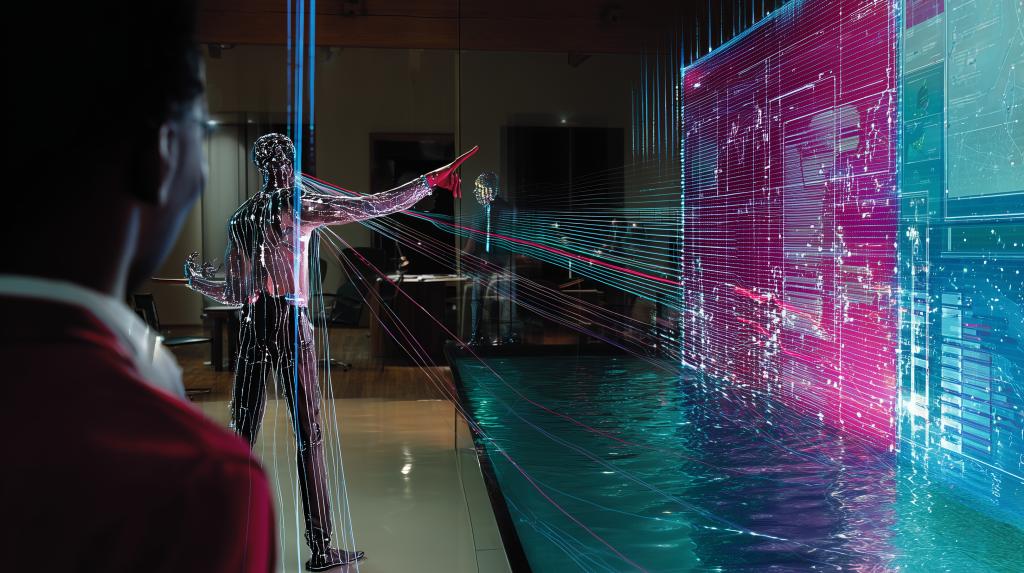
Maria stared at the timeline stretched across her monitor, 47 hours of raw footage from an indie documentary shoot blinking back at her. The old Maria would have sighed, grabbed another coffee, and settled in for weeks of painstaking work. But today, she clicked a single button labeled “AI Scene Detection” and watched as algorithms began parsing through every frame, identifying speakers, detecting scene changes, and flagging the most emotionally resonant moments.
This isn’t science fiction—it’s Tuesday afternoon in 2025, and artificial intelligence has fundamentally transformed how we approach post-production.
The New Language of Automated Storytelling
The revolution began quietly in editing suites around the world. What started as simple automated transcription has evolved into sophisticated AI systems that understand narrative structure, emotional beats, and visual composition. These tools don’t replace human creativity—they amplify it, handling the technical heavy lifting so editors can focus on the art of storytelling.
Modern AI editing assistants can analyze hours of footage in minutes, automatically syncing audio, detecting the best takes, and even suggesting cut points based on dialogue patterns and visual flow. They recognize when someone is speaking, when they pause for emphasis, and when a reaction shot might enhance the emotional impact of a scene.
Consider how AI now handles the tedious process of rough cuts. Instead of scrubbing through hours of footage, editors can input simple parameters: “Find all medium shots of the interview subject looking contemplative” or “Identify moments where the music swells.” The AI delivers precisely what’s needed, transforming what once took days into work completed in hours.
The Colorist’s New Palette
Perhaps nowhere is AI’s impact more visually striking than in color grading. Traditional color correction required years of training to master, with colorists developing an almost mystical understanding of how subtle adjustments could transform a scene’s emotional resonance. Today’s AI-powered color grading tools democratize this expertise while pushing creative boundaries further than ever before.
AI systems can now analyze the emotional content of a scene and suggest color palettes that enhance the narrative. They understand that warm oranges and deep blues create intimacy, while desaturated greens might underscore tension or unease. More remarkably, they can maintain visual consistency across hundreds of shots, ensuring that skin tones remain natural while achieving the director’s creative vision.
The technology extends beyond basic correction. AI can now perform complex tasks like sky replacement, season changing, and even time-of-day adjustments with remarkable precision. It analyzes lighting conditions, shadows, and reflections to create seamless composites that would have required teams of VFX artists just a few years ago.
The Human Touch in an Automated World
Yet the most successful post-production workflows today aren’t fully automated—they’re collaborative partnerships between human creativity and artificial intelligence. The AI handles pattern recognition, technical consistency, and time-intensive tasks, while human editors and colorists focus on the subtle emotional beats that make stories compelling.
This collaboration manifests in fascinating ways. AI might suggest ten different color grades for a sunset scene, but it takes human judgment to choose the one that best serves the story’s emotional arc. Automated editing can identify the technically best moments in an interview, but human editors understand which imperfect moment reveals character in a way that resonates with audiences.
The technology also enables experimentation at unprecedented scales. Editors can now test multiple cut variations, explore different color treatments, and iterate on creative decisions without the time penalty that once made such exploration prohibitive. This freedom to experiment has led to more adventurous storytelling and visual styles.
Challenges and Ethical Considerations
The integration of AI in post-production isn’t without challenges. The technology requires significant computational power, and the learning curve for new tools can be steep. There’s also the ongoing debate about how AI training data affects creative output—are we seeing more homogenized results as algorithms learn from existing content?
More fundamentally, there’s the question of creative ownership. When an AI system suggests a color grade that transforms a scene, who deserves credit for that creative decision? The industry is still grappling with these questions as the technology continues to evolve.
Union concerns about job displacement are valid but nuanced. While AI automates many technical tasks, it also creates new opportunities for creative professionals to work at higher levels of artistic decision-making. The most successful post-production professionals are those who embrace these tools as creative collaborators rather than threats.
The Future of Collaborative Creativity
Looking ahead, the boundary between human and artificial intelligence in post-production will likely continue to blur. We’re already seeing AI systems that can generate original music to match a scene’s emotional tone, create realistic dialogue replacements, and even suggest narrative improvements based on audience response data.
The next frontier involves AI that understands directorial intent at a deeper level. Imagine systems that can learn a filmmaker’s visual style and automatically apply it across projects, or algorithms that can predict which moments will resonate most with specific audiences and optimize cuts accordingly.
Yet technology remains just that—a tool. The most compelling films still require human insight, emotional intelligence, and the ineffable spark of creative vision. AI-assisted editing and color grading aren’t replacing filmmakers; they’re freeing them to focus on what humans do best: telling stories that matter.
Embracing the New Workflow
For editors and colorists entering this new landscape, the key is embracing AI as a creative partner rather than a replacement. The professionals thriving in this environment are those who understand both the capabilities and limitations of these tools, using them to enhance rather than dictate their creative process.
The future of post-production is collaborative, efficient, and more creatively ambitious than ever before. As AI handles the technical complexities, human storytellers are free to push creative boundaries, experiment with new techniques, and focus on what drew them to filmmaking in the first place—the power to move audiences through the marriage of technology and artistry.
In Maria’s editing suite, the AI has finished its initial analysis. Forty-seven hours of footage have been organized, tagged, and prepared for creative assembly. But the real work—the work of shaping those raw moments into something that will make audiences laugh, cry, and think—that’s still entirely human. And that’s exactly how it should be.
 AI Film Studio