
There’s a particular thrill that runs through a creative director’s veins when a client says: “We want something impossible.”
For decades, luxury brands have distinguished themselves through the unattainable—not just in their products, but in their advertising. The $500,000 shoot in the Moroccan desert. The week-long production with a single Michelin-starred chef for a ten-second sequence. The helicopter tracking shot following a hand-crafted timepiece tumbling through the aurora borealis.
But here’s the uncomfortable truth the luxury advertising world is grappling with right now: AI has made the impossible ordinary.


The Extinction of Expensive as Exclusive
I recently spoke with a creative director at a heritage fashion house who shared something revealing. Their team had just wrapped a campaign shoot—three days in Iceland, a crew of forty-five, a budget that could buy a small apartment in Paris. Two weeks later, a competitor released a campaign featuring ethereal models floating through crystalline ice caves, their gowns transforming into cascading water, all rendered in AI. Production time? Four days. Budget? A fraction.
“The whole time we were freezing on that glacier,” she told me, “I kept thinking: someone’s going to make this in Midjourney next month, and it’s going to look just as good. Maybe better.”
This is the existential crisis facing luxury brands in 2025. When anyone with a subscription and a prompt can generate “impossible” imagery, what does impossible even mean anymore?
Enter the Unshootable
The answer, paradoxically, lies in leaning into the very thing that threatens to commoditize production: AI itself.
The most sophisticated luxury brands aren’t running from generative AI—they’re using it to create what I call “unshootable” commercials. Not unshootable because they’re expensive, but unshootable because they exist in a space between the real and the imagined that only AI can access.
Let me give you an example. A Swiss watchmaker recently released a sixty-second spot that’s been haunting me. It opens on a close-up of their signature timepiece, photographed traditionally—you can see every scratch on the sapphire crystal, every reflection. Then, impossibly, the camera continues moving into the watch. Not through the crystal as a dive into macro photography, but into the metal itself, as if the steel has become liquid, then vapor, then thought.
We travel through the molecular structure of the alloy, each atom rendered as a tiny, spinning version of the watch face itself. Time becomes spatial. Space becomes temporal. The gears aren’t mechanical anymore—they’re clouds of probability, quantum states collapsing and expanding. The second hand is a red thread woven through the fabric of spacetime, visible across all dimensions simultaneously.
It’s breathtaking. It’s philosophically coherent with the brand’s message about time and craftsmanship. And it’s completely unshootable—not because of budget constraints, but because it depicts states of matter and perception that cannot exist in our physical reality.
The New Luxury: Conceptual Impossibility
This is where generative AI offers luxury brands something unprecedented: the ability to visualize the conceptual, not just the expensive.
Traditional impossible shoots were really just “very difficult” shoots. Sure, it cost a fortune to film on the International Space Station or to capture the exact moment a diamond shatters, but these things existed in physical reality. AI allows brands to step beyond physical reality entirely, into spaces of pure concept and emotion.
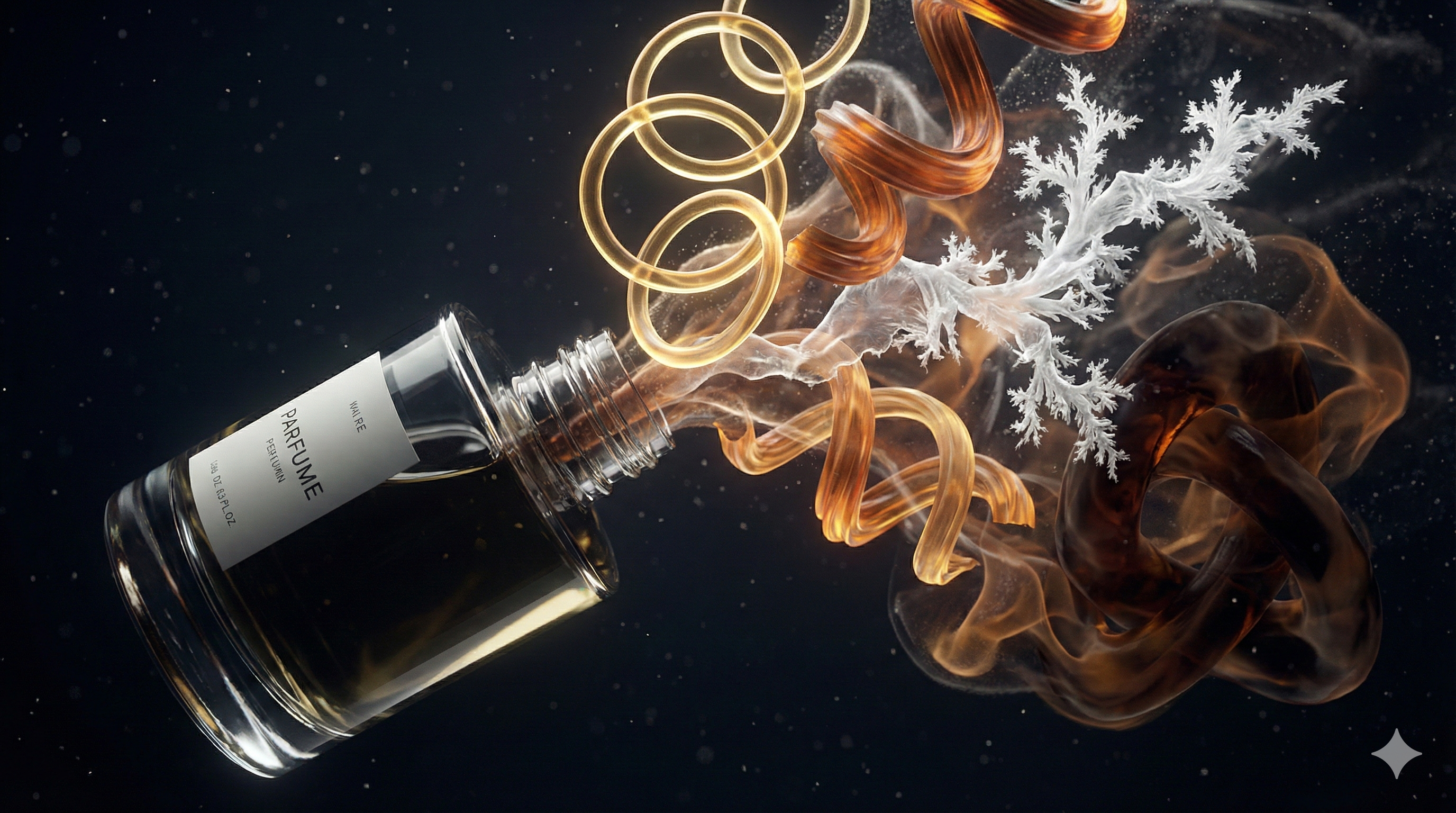
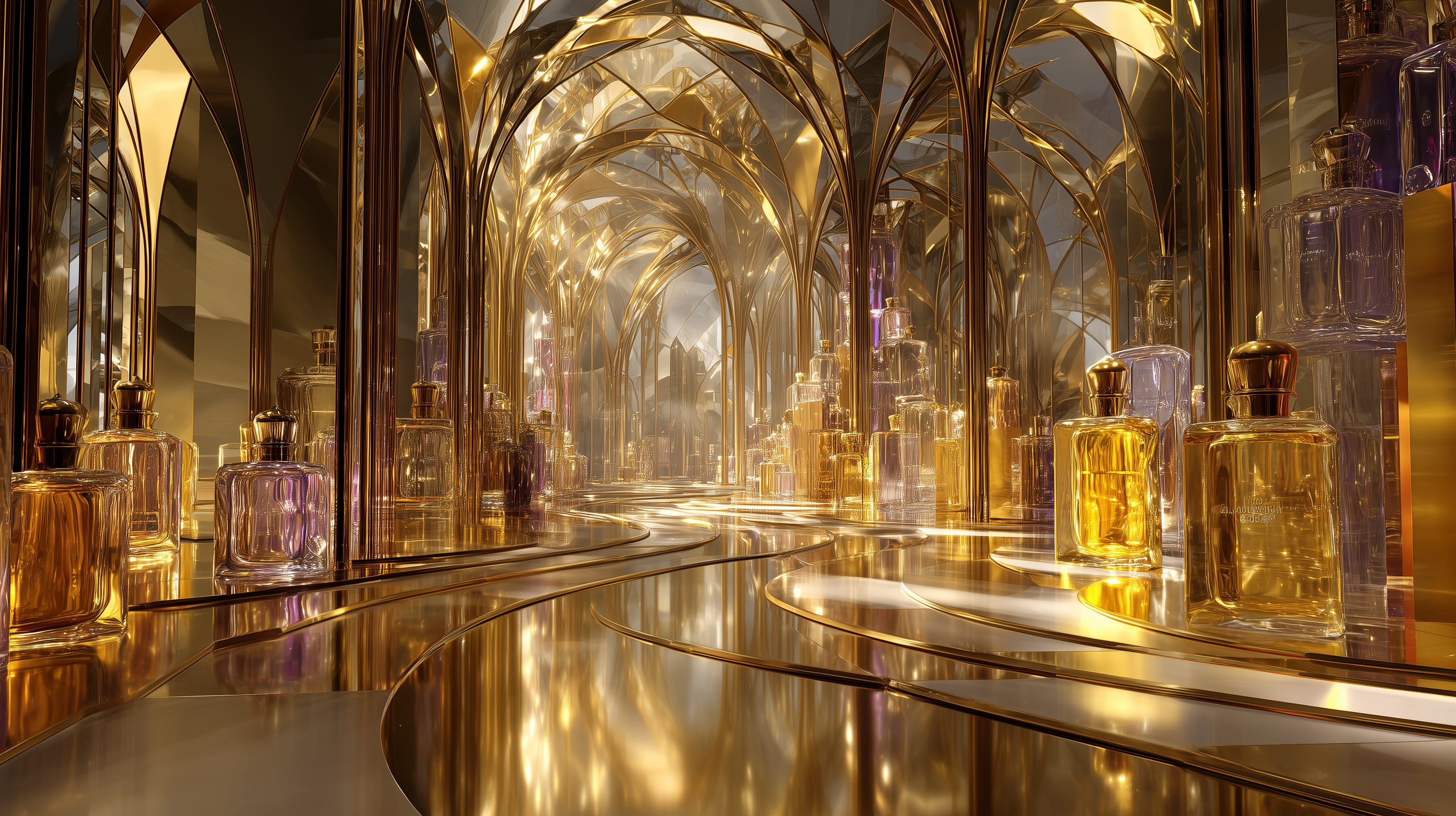
A perfume brand I’ve been following created a commercial that visualizes scent as architecture. Not metaphorically—literally. The protagonist walks through buildings that are constructed from the molecular structure of different fragrance notes. Bergamot forms Gothic arches that ring like bells when touched. Vanilla creates warm, recursive Escher spaces. Ambergris manifests as an impossible geometry that seems to fold time back on itself.
Try shooting that with any budget.
The Three Principles of Unshootable Luxury Content
Through analyzing the most successful AI-driven luxury campaigns of the past year, I’ve noticed three consistent principles:
1. Ground Before You Transcend
The most effective unshootable commercials begin in hyperreality. They open with footage or imagery so crisp, so tactile, so unmistakably real that it establishes trust. A leather grain you can almost feel. The precise weight of a silk fabric. The specific way light catches on 18-karat gold.
Only after establishing this reality do they transcend it. The leather dissolves into the memory of the animal it came from, running through ancient forests. The silk becomes a liquid language, calligraphy that writes itself in three dimensions. The gold transforms into sunlight from a star that died a billion years ago.
This grounding is crucial. Without it, the AI-generated sequences feel disconnected from the product, like beautiful nonsense. With it, they feel like the brand is revealing a deeper truth about its essence.
2. Make the Impossible Meaningful
Any competent prompt engineer can generate surreal imagery. The discipline of unshootable luxury content is ensuring that every impossible element serves the brand narrative.
An automotive brand recently created a commercial showing their electric vehicle driving through a landscape made of light. Not generic light—the specific photons emitted by their charging network, visualized as a living ecosystem. Trees of pure electricity. Rivers of flowing current. The car doesn’t just drive through this world; it’s in conversation with it, giving and receiving energy in a visible exchange.
Every frame is impossible to shoot, but every frame is also telling you something specific about the product’s relationship with sustainable energy. The impossibility isn’t decoration—it’s meaning made visible.
3. Preserve the Signature of Craft
Here’s the counterintuitive part: the best unshootable commercials make their AI origins visible, but in a way that emphasizes artistry rather than automation.
Luxury has always been about the visible hand of the craftsperson. You can see the individual stitches on a Hermès saddle. You can hear the watchmaker’s steady breath in the precision of a Patek Philippe movement. The challenge with AI is preserving this signature of craft in a medium that can feel effortlessly generated.
The solution? Many brands are developing distinctive AI “styles” that are as recognizable as a cinematographer’s signature. One jewelry house works exclusively with a particular AI artist who creates these haunting, oil-painting-like transitions where luxury items emerge from and dissolve into abstract fields of color. It takes weeks to achieve the exact quality they want. It’s painstaking. It’s craft.
When you watch their commercials, you’re not just seeing expensive things—you’re seeing someone’s laborious, artistic vision of those expensive things. The AI is a brush, not a replacement for the painter.
The Production Reality
Let’s talk practically about how these unshootable commercials come together, because it’s not as simple as typing prompts into ChatGPT.
The most successful productions I’ve seen follow a hybrid workflow:
- Real photography/footage for establishing reality and product shots (typically 2-3 days of traditional shooting with top-tier cinematographers)
- 3D asset creation of products in minute detail, often scanned at microscopic resolution
- AI generation for transitional sequences and impossible environments (using tools like Runway, Pika, and custom-trained models)
- Hybrid compositing where real footage, 3D renders, and AI generations are layered seamlessly
- Traditional post-production for color grading, sound design, and final polish
The timeline? Usually 6-8 weeks from concept to final delivery. The budget? Typically 30-60% of what an equivalent “traditional impossible” shoot would cost, but the creative ambition is significantly higher.
The Ethical Considerations
We need to address the elephant in the room: what happens to the crews, the location scouts, the lighting technicians who built their careers on impossible shoots?
This is a legitimate concern, and the answer isn’t simple. What I’m seeing is a shift rather than a replacement. The best unshootable commercials still require traditional production for their grounded sequences—often, these opening sequences are even more ambitious because budgets have been freed up from the impossible elements.
Moreover, a new kind of specialist is emerging: the AI cinematographer who understands shot composition, lighting, movement, and emotion but applies these principles in generative space. Many traditional directors are transitioning into this role, bringing decades of visual storytelling experience to a new medium.
The teams getting hired for unshootable productions look different—more AI artists, fewer gaffers—but they’re not necessarily smaller. The work has changed, not disappeared.
What This Means for Brand Storytelling
The deeper implication of unshootable commercials goes beyond production logistics. It represents a fundamental shift in how luxury brands can tell stories.
For the first time, brands can show us not just what their products look like, but what they mean in a visual language that matches the ambition of that meaning. A watch isn’t just a time-keeping instrument—it’s a meditation on mortality and precision, and now we can see that meditation unfold across impossible dimensions. A perfume isn’t just a scent—it’s a memory architecture, and now we can walk through that architecture.
The challenge, of course, is that with great visual power comes the temptation toward empty spectacle. I’ve seen plenty of AI-generated luxury commercials that are stunning and completely forgettable because they prioritized impossibility over meaning.
The brands succeeding in this space are the ones treating AI as a philosophical tool, not just a production tool. They’re asking: “What truth about our brand could we only communicate through impossible imagery?” Not: “What crazy stuff can we make AI generate?”
The Future of Impossible
As I write this in late 2025, we’re still in the early days of understanding what unshootable commercial production can become. The technology is evolving weekly. Just last month, a new model was released that can maintain character consistency across generated sequences—a breakthrough that makes narrative unshootable content significantly easier to produce.
I suspect we’ll see luxury brands developing proprietary AI models trained specifically on their heritage, their archives, their aesthetic DNA. Imagine a Chanel commercial generated by an AI that has ingested every campaign, every runway show, every sketch from the maison’s history. The resulting imagery would be both impossible and unmistakably Chanel in a way that generic AI could never achieve.
We’ll also see more interactive unshootable content—commercials that exist in virtual and augmented reality spaces, where the impossible imagery responds to the viewer’s presence and perspective.
Creating Your First Unshootable Commercial
If you’re a creative director or brand manager reading this and thinking about commissioning your first unshootable commercial, here’s my advice:
Start with one impossible sequence, not an entire impossible film. Ground your commercial in traditional cinematography, then identify one moment—one crucial transition or revelation—where AI can take you somewhere physical production cannot. Make that sequence so meaningful, so aligned with your brand story, that its impossibility feels inevitable.
Work with AI artists who understand luxury, not just AI. Look at their portfolios. Do they understand light? Composition? The specific weight and texture that luxury products carry? Technical AI proficiency is necessary but not sufficient.
And most importantly: don’t try to hide the AI. Luxury consumers are sophisticated. They know these images are generated. The magic isn’t in fooling them—it’s in showing them something so conceptually and emotionally true that the method of creation becomes irrelevant.
The Unshootable Future
Late last night, I watched a new commercial from a heritage luggage brand. It showed their signature trunk transforming into every journey it had ever taken—becoming train compartments, ship cabins, safari tents, moon bases, each transition as fluid as memory itself. The final shot showed thousands of these transforming trunks floating in space, each one a different journey, before they all collapsed back into a single trunk standing in the present moment.
It was impossible. It was unshootable. And it was the most emotionally resonant piece of luggage advertising I’ve ever seen.
This is what’s possible now. Not just expensive. Not just difficult. But truly impossible—until it isn’t.
The age of the unshootable commercial has arrived, and luxury brands bold enough to embrace it aren’t just creating advertising. They’re creating a new visual language for desire itself.
What impossibility does your brand need to show the world?
 AI Film Studio